How to Layer Necklaces
2 Min Read

Start With One Piece You Love
The easiest layered looks are built around a single favorite: a pendant you wear every day, a fine chain with a little sparkle, or a bolder link. Decide which piece is the star, then choose the others to frame it rather than compete with it.
Two or three necklaces are plenty to begin with. Lay them out on a flat surface before you put them on, so you can see how the lengths and textures work together.
Choose a Base Layer
A simple chain close to the neck makes a good base. Fine cable and paperclip chains are versatile because they sit flat and suit almost any neckline. From there, each layer should hang a little lower than the one above, with enough space between them that each can be seen on its own. Keep the finest chain highest and the heaviest lowest, so the weight sits naturally and the layers don’t pull on one another.

Add Contrast in Length and Texture
Pair a delicate chain with a bolder one, or a plain chain with a pendant, so the eye moves from one to the next. Mixing textures, such as a smooth chain beside a link chain, adds interest without adding more pieces.
Stacking Rings With Intention
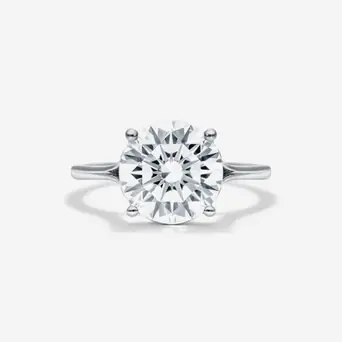
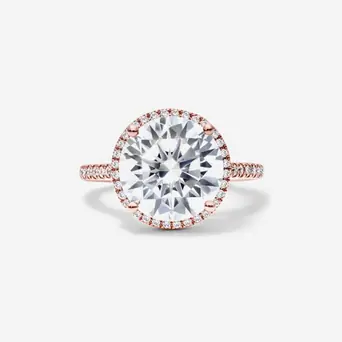
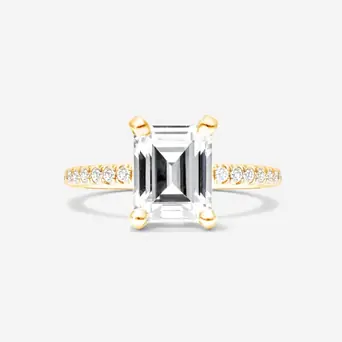
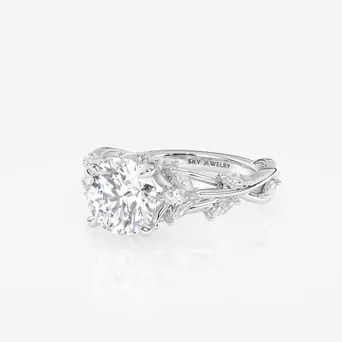
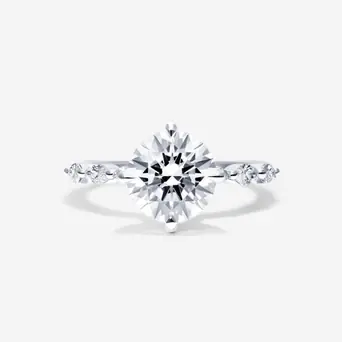
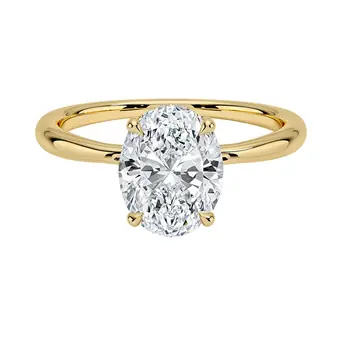
The same thinking works on your hands. An engagement ring or a favorite statement ring is the anchor; slim bands on either side frame it. Stacks look best when the rings share something, whether a metal, a shape or a level of sparkle.
Mixing Metals
Yellow, white and rose gold can be worn together. Repeat each metal at least twice, on the neck or the hands, so the mix looks deliberate, and use a piece that combines metals to tie the look together.
A simple three-ring stack:
- A plain band below your center ring, to protect it and give it a base.
- Your center ring, the piece the stack is built around.
- A slim pavé or textured band above it, to add sparkle without crowding.
Necklace Lengths at a Glance
Necklace lengths have traditional names. Knowing them makes it easier to plan layers that fall at different points, so each necklace has its own space.
| Length | Typical length | Where it sits | Layers well with |
|---|---|---|---|
| Choker | 14 to 16 in | At the base of the neck | Princess |
| Princess | 17 to 19 in | Just below the collarbone | Choker or matinee |
| Matinee | 20 to 24 in | At the top of the chest | Princess |
| Opera | 28 to 36 in | Over the chest | Shorter chains |

Keep It Comfortable
Layers tangle less when the chains differ in weight and length. A necklace spacer or a single multi-strand piece can keep them apart. Take layered necklaces off one at a time and store them separately, with the clasps fastened.
Our Thoughts
There are no strict rules to layering. Start with one piece you love, give every layer its own space, and repeat a metal or a shape so the whole look holds together. Then wear what feels like you.