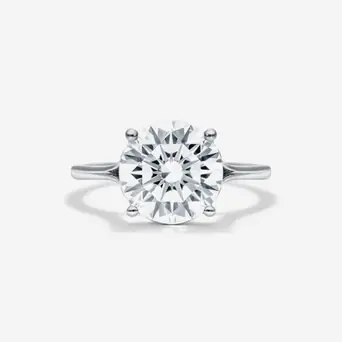
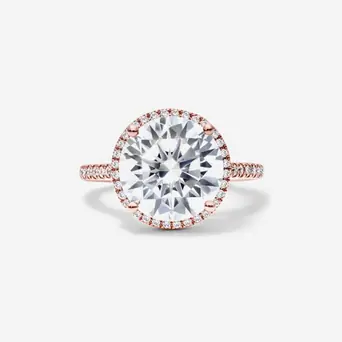
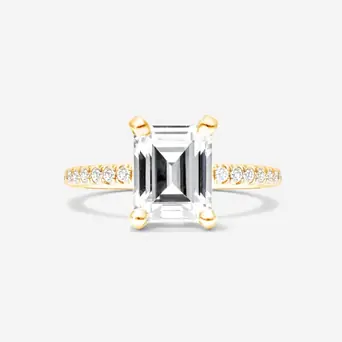
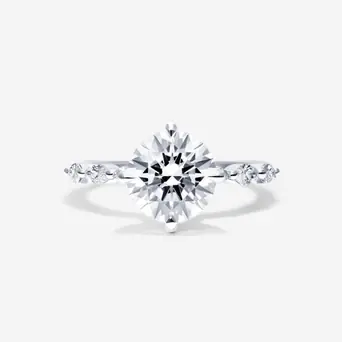
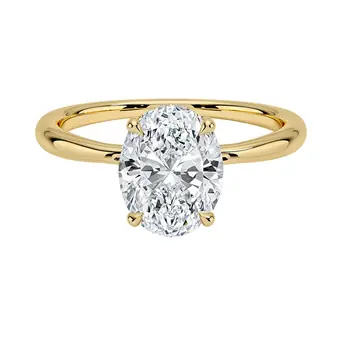
Brilliant Shapes
Brilliant cuts use many triangular and kite-shaped facets to make the most of sparkle. The round brilliant is the classic, and the shape whose cut is graded most precisely. Oval, cushion, princess, radiant, pear, marquise and heart are brilliant-style cuts too, each with its own outline.
Length-to-Width Ratio
Elongated shapes are described by their length-to-width ratio. A higher ratio makes an oval or pear look longer and slimmer; a lower one makes it rounder. There is no right ratio, only the outline you prefer. In elongated brilliants, look out for a bow-tie: a dark band across the center that some stones show more than others.
Step Cuts
Emerald and Asscher cuts have long, parallel facets arranged like steps. Rather than many small flashes, they show broad flashes of light and a calm, hall-of-mirrors look. Their open facets reveal more of a diamond’s clarity and color, so a higher clarity and color grade is often worth it for a step cut.
Choosing a Shape
Start with the shape you are drawn to, then think about how it suits your hand and the setting. Elongated shapes, such as oval, pear and marquise, can make fingers look longer and tend to look larger for their weight. Round and cushion shapes are classic and versatile. Shapes with points, such as pear, marquise, princess and heart, are best protected by a prong or a V-shaped tip over each point, since a point can chip with a hard knock. If you will wear a band beside your ring, try the two together, as some outlines sit more neatly beside a band than others.

Next Resource
Lab-Grown and Natural Diamonds Compared
Both are real diamonds. How they differ in origin, how they are graded, and how to choose between them.
Read Now