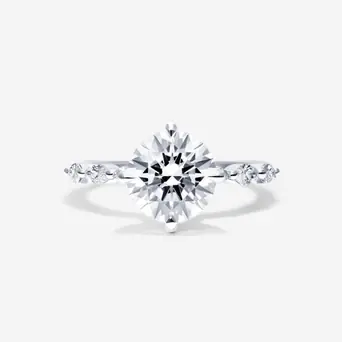
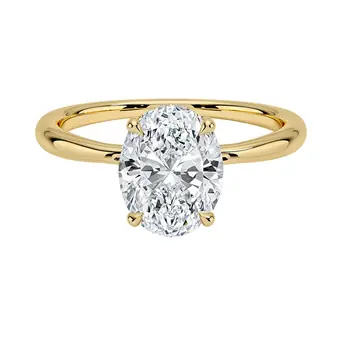
The 4Cs of Diamonds
Cut, color, clarity and carat weight, and how to balance them for the diamond you want.
Diamond Cut
Cut describes how well a diamond’s facets are proportioned, aligned and polished, and so how it handles light. It is the only one of the 4Cs shaped entirely by the cutter. For round brilliant diamonds, the Gemological Institute of America (GIA) grades cut from Excellent to Poor, looking at proportions, symmetry and polish together. Two diamonds with the same color, clarity and weight can look very different because of cut alone.
Ideal Cut Diamonds
A well-cut diamond returns light that enters through the top back out through the top, so the stone looks bright from edge to edge. If the pavilion is too deep, light escapes through the sides and the center can look dark; if it is too shallow, light leaks out through the bottom and the stone can look glassy. Some laboratories and retailers call the best-performing proportions “ideal”. On a GIA report, the top cut grade for a round diamond is Excellent.
Understanding Brilliance, Dispersion & Scintillation
Three effects make up a diamond’s sparkle. Brilliance is the white light reflected back to your eye. Dispersion, often called fire, is that light split into flashes of color. Scintillation is the pattern of light and dark flashes you see when the diamond, the light or you move. A well-cut stone balances all three. Look at a diamond in more than one kind of light, not only under bright spotlights, to see how it really performs.
Diamond Color
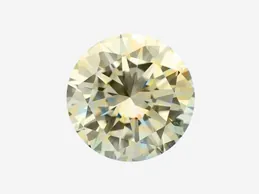
Diamond color grading measures how close a white diamond is to having no color at all. GIA grades it on a scale from D, colorless, to Z, light yellow or brown, by comparing each diamond face down against master stones under controlled light. The differences between neighboring grades are subtle, and many are hard to see once the diamond is face up and set in a ring.
Colorless Diamonds
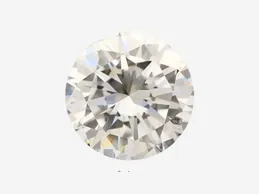
D, E and F are the colorless grades. D is the highest; E and F show only traces of color that a trained grader can detect side by side with master stones. Colorless diamonds pair naturally with white gold and platinum, which do nothing to warm the stone.
Near Colorless Diamonds
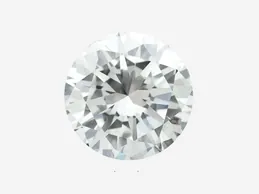
G, H, I and J are near colorless. Face up and set, most of these diamonds look white to the eye, with any warmth showing mainly when you compare them with higher grades. In yellow or rose gold, which reflect warm tones into the stone, a near colorless diamond can look just as white as a colorless one once it is set.
Diamond Clarity
Clarity describes inclusions inside a diamond and blemishes on its surface, small marks that most diamonds form as they grow. GIA grades clarity under 10x magnification, from Flawless to Included, by the size, number, position and visibility of these characteristics.
Which Clarity Grade to Choose?
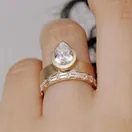
For most people the aim is an eye-clean diamond: one whose inclusions you can’t see without magnification at a normal viewing distance. Many VS2 and SI1 diamonds are eye-clean, but each stone is different, so look at the diamond itself rather than the grade alone. Step-cut shapes such as emerald and Asscher, with their open, mirror-like facets, show inclusions more readily than brilliant cuts, so a higher clarity grade can be worth it there.

Choose a Clarity Grade
Very slightly included: minor inclusions are seen with some effort under 10x magnification.
Carat Weight
Carat is a unit of weight, not size: one carat weighs 0.2 grams, and each carat divides into 100 points, so a 75-point diamond weighs 0.75 carats. Because weight is spread differently by each shape and cut, two diamonds of the same weight can look different in size.
Diamond Size and Carat Weight
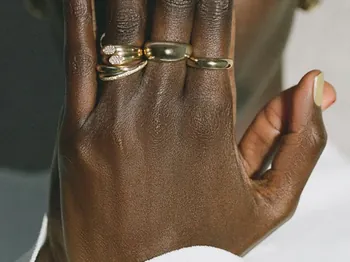
What you see on the hand is the diamond’s face-up spread, its diameter or length and width. A well-cut stone puts its weight where it shows, while a deeply cut one can hide weight below the girdle. Elongated shapes such as oval, marquise and pear tend to look larger than a round diamond of the same weight. Choose a few weights below to see the approximate diameter of a well-cut round diamond.

Choose a Carat Weight
1.00 ct: About 6.5 mm across. Approximate, for a well-cut round diamond.
Our Advice
Start with cut, since it does the most for a diamond’s sparkle. Then choose the lowest color and clarity grades that still look white and clean to your eye in the setting you love: near colorless and eye-clean grades often give the best balance. Finally, choose the weight. Diamonds just under a whole or half carat look almost the same as those right at it, so a 0.90 carat stone can be a sensible alternative to a full carat. Always ask for a grading report from an independent laboratory, and compare diamonds side by side when you can.
Your Diamond’s Qualities
A diamond’s cut evaluates its proportions and how effectively it reflects light. Cut grades range from “Excellent” to “Poor.” Diamonds with excellent cuts display remarkable fire, brilliance, and scintillation.
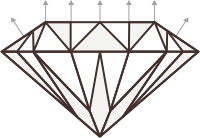
Exceptional fire, brilliance, and precise diamond craftsmanship.

Next Resource
Diamond Shapes
From round brilliant to emerald cut: how each shape plays with light, and what to look for in it.
Read Now