Diamond Clarity, Explained
Inclusions, blemishes and the clarity scale, and what “eye-clean” means.
What Clarity Measures
Most diamonds contain tiny features formed as they grew: crystals, feathers, clouds and needles inside the stone, called inclusions, and small marks on the surface, called blemishes. Clarity grades describe how visible they are under 10x magnification.
The Clarity Scale
GIA uses eleven grades in six groups: Flawless (FL), Internally Flawless (IF), Very Very Slightly Included (VVS1, VVS2), Very Slightly Included (VS1, VS2), Slightly Included (SI1, SI2) and Included (I1, I2, I3). The position of an inclusion matters too: one near the center of the table is easier to see than one near the edge.
Eye-Clean Diamonds
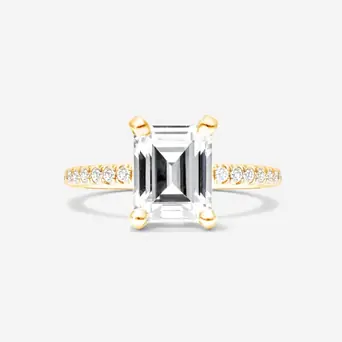
An eye-clean diamond shows no inclusions to the unaided eye at a normal viewing distance. Many VS and some SI diamonds are eye-clean, so you rarely need the highest grades for a stone that looks clean on the hand. Step cuts like emerald and Asscher are the exception: their open facets show more, so aim higher with those shapes.
Common Inclusions
Crystals are tiny minerals trapped inside the diamond as it grew; some are colorless, others dark. Feathers are small breaks within the stone that can look white or reflective. Clouds are groups of tiny pinpoints that, when dense, can make a diamond look slightly hazy. Needles are thin, long crystals. Most are harmless, but a large feather that reaches the surface, especially near a prong or the girdle, is worth asking a jeweler about, because it can make that area more vulnerable to a hard knock.
Reading the Plot
Full grading reports usually include a plot: a map of the diamond’s main inclusions, drawn with symbols explained in a key. It helps you match the report to the stone and see where the characteristics that set its grade lie.

Next Resource
Carat Weight and Diamond Size
Carat is weight, not size. How weight translates to what you see, and why shape and cut change it.
Read Now